Why they really matter - celebrant vs officiant
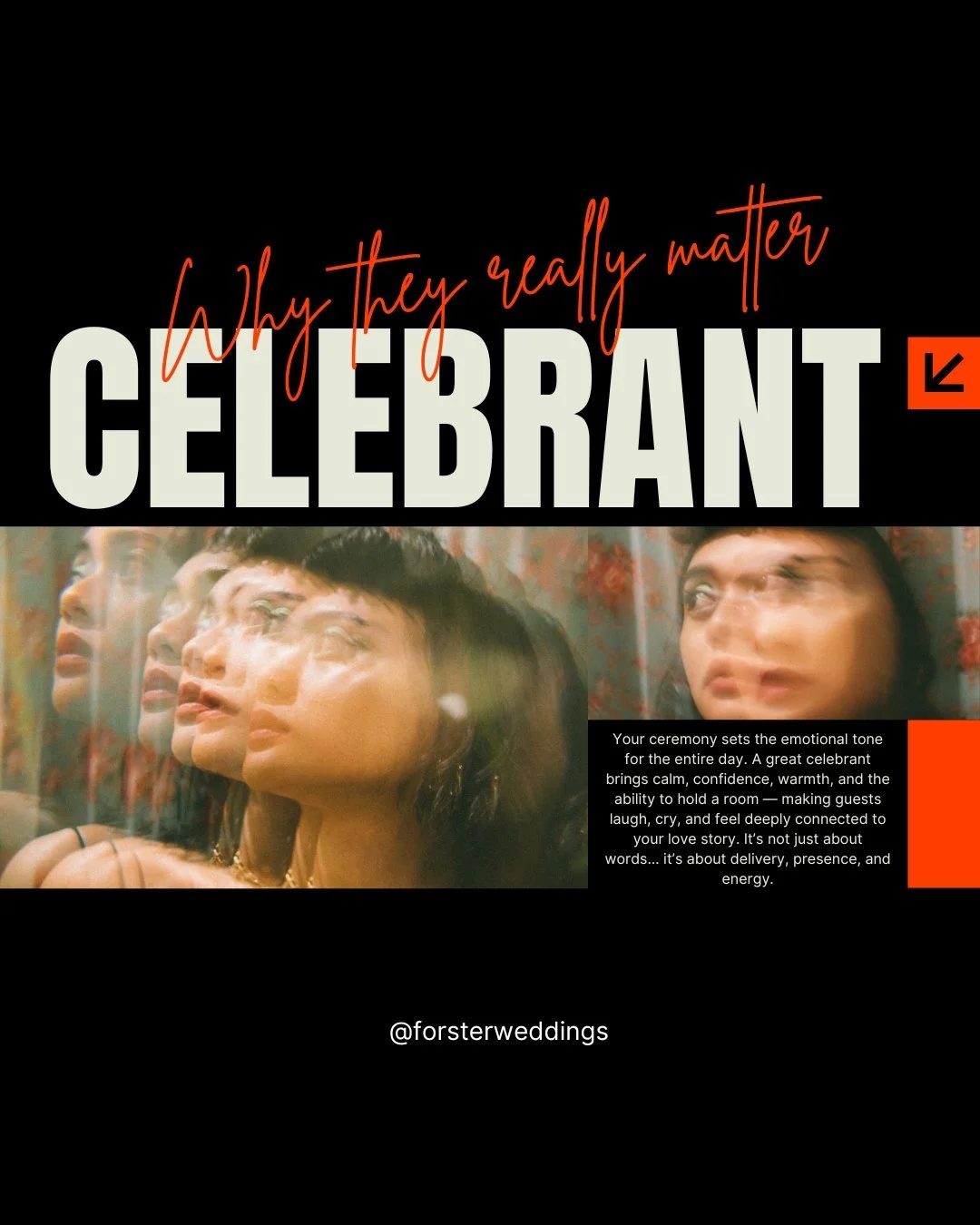
Celebrant vs Officiant: What’s the Difference? ✨
💍 Why Your Ceremony Leader Matters More Than You Think
When you're planning a wedding, there are so many decisions to make that it's easy to assume your ceremony leader is simply the person who stands at the front, says the required words and makes your marriage official.
But there's much more to it than that.
And depending on where you're getting married, your culture, your religion and the legal requirements of your country, you may hear different terms used — including celebrant, officiant, minister, registrar or civil celebrant.
So what's the difference?
The answer isn't completely universal.
The terminology and legal responsibilities vary from country to country.
What matters most is understanding exactly what the person you're booking is legally authorised and professionally equipped to do — and, beyond that, what kind of ceremony experience they can create for you.
Because the person leading your ceremony has an enormous influence on one of the most emotional moments of your wedding day.
What Is a Celebrant? 🤍
A celebrant is generally someone who creates and leads ceremonies that are designed around the people being celebrated.
For weddings, this often means creating a ceremony that feels personal, meaningful and reflective of the couple rather than simply following a predetermined script.
A celebrant may work with you to understand:
How you met
Your relationship story
Your personalities
What you love about each other
Your family and friends
Cultural traditions
Important values
Your preferred ceremony style
Readings, rituals or symbolic elements
Your vows
The overall tone you want to create
The result can be a ceremony that feels completely unique to the two of you.
It's your story, rather than a template.
However, it's important to remember that the word celebrant does not automatically tell you what someone is legally authorised to do.
Always check the legal requirements for the country or jurisdiction where you're getting married.
What Is an Officiant? 💍
The term officiant is commonly used in countries such as the United States and Canada to describe the person who leads a wedding ceremony and, where legally authorised, performs the marriage.
An officiant may be a religious leader, civil official, professional wedding officiant or another person authorised under local law.
Depending on the type of officiant and the ceremony you're having, the experience can range from highly traditional and structured to deeply personal and customised.
So it's important not to assume that officiant automatically means:
“Less personal.”
It doesn't.
Likewise, celebrant doesn't automatically mean:
“More personal.”
The individual professional, their approach and the legal framework in which they operate all matter.
What About Religious Ceremonies? 🕊️
This is where things can become even more nuanced.
Many couples choose to incorporate religious or cultural traditions into their wedding ceremony.
A religious minister, priest, rabbi, imam or other religious leader may have specific requirements around the ceremony, marriage preparation, readings, rituals and who can be married within that tradition.
For some couples, this is an essential part of the wedding experience.
For others, they may want a non-religious ceremony that still honours cultural or family traditions.
Neither approach is more or less meaningful.
Your ceremony should reflect what matters to you.
If you're incorporating cultural, ethnic or religious traditions, make sure your ceremony leader understands them and is comfortable delivering them respectfully and accurately.
Cultural Weddings Can Have Their Own Requirements 🌏
As weddings become increasingly multicultural and international, couples are often bringing together multiple traditions within a single celebration.
You may have one partner from one cultural background and another from a completely different tradition.
You may be getting married in a country different from where one or both of you were raised.
You may want to include multiple languages, cultural rituals, family traditions or symbolic elements.
This is exactly why choosing the right ceremony professional matters.
Ask whether they have experience working with the traditions you want to include.
Can they pronounce names correctly?
Can they explain the meaning of a ritual to guests who may not be familiar with it?
Can they respectfully balance multiple cultures?
Can they work alongside religious or cultural leaders where required?
Cultural understanding is part of creating a ceremony that feels authentic rather than simply decorative.
The Legal Side Matters Too ⚖️
This is one area where you should never make assumptions.
Different countries — and sometimes different regions within a country — have different legal requirements for marriage.
The person leading your ceremony may or may not be legally authorised to solemnise your marriage depending on where you're getting married and what type of ceremony you're having.
Before booking, establish:
Are they legally authorised to conduct your marriage?
What paperwork do they handle?
What paperwork do you need to complete?
What legal requirements apply to your location?
Are there specific witnesses required?
Are there timing or notice requirements?
What happens before and after the ceremony?
Are there additional legal or religious requirements?
If you're having a destination wedding, this becomes particularly important.
Never assume the rules from your home country automatically apply where you're getting married.
But Here's What Really Matters: The Experience ✨
Once you've established that your ceremony can legally be conducted the way you want, there's another question that deserves just as much attention:
How does this person make you feel?
Because your ceremony leader isn't simply delivering words.
They're standing in front of everyone you love.
They're telling your story.
They're guiding the emotional rhythm of the ceremony.
They're managing transitions.
They're responding to unexpected moments.
They're holding your attention when you're nervous.
And they're setting the tone for the rest of your wedding day.
You want someone who can create calm when you're nervous.
Someone who can make your guests laugh without turning your ceremony into a comedy show.
Someone who can create emotion without forcing it.
Someone who knows when to pause.
Someone who knows when to move things along.
And someone who can command a room without making the ceremony about themselves.
Presence matters.
A Great Ceremony Leader Knows How to Hold a Room 🎤
Think about what happens during your ceremony.
Your guests are watching.
Some are emotional.
Some are meeting family members for the first time.
Some may not know your full story.
And you and your partner may be experiencing a huge range of emotions all at once.
Your ceremony leader needs to bring everyone into the moment.
That takes more than good writing.
It takes:
Voice.
Timing.
Confidence.
Warmth.
Humour.
Empathy.
Presence.
Experience.
The difference between reading words and delivering a ceremony can be enormous.
So Which One Should You Choose?
There isn't one universal answer.
The right choice depends on where you're getting married, what type of ceremony you're having, your legal requirements, your cultural or religious traditions and the experience you want to create.
Instead of choosing based purely on the title celebrant or officiant, ask better questions.
Ask about their legal authority.
Can they legally conduct your marriage in your chosen location?
Ask about their ceremony style.
How personalised can the ceremony be?
Ask about their experience.
Have they worked with couples and traditions similar to yours?
Ask about their process.
How do they learn your story and turn it into a ceremony?
Ask about their presence.
How do they handle nerves, emotion, unexpected moments and a room full of guests?
Ask about the feeling.
Most importantly:
Can you imagine them standing beside you on your wedding day?
Your Ceremony Sets the Tone for Everything That Follows 🤍
Your ceremony is more than a legal formality.
It's the moment the wedding truly begins.
It's where your guests hear your story.
It's where promises are made.
It's where two people publicly choose one another.
And it's often the first time during the day that everyone you love is gathered together in one place.
That's a huge responsibility for the person leading it.
The right professional will understand that.
They won't simply get through the required words.
They'll create space for the emotion, the laughter, the nerves, the personalities and the meaning behind the day.
They'll make the ceremony feel like you.
Find Your Ceremony Professional 💍
Whether you're looking for a celebrant, officiant, religious leader or another qualified ceremony professional, take the time to understand exactly what you need for your wedding and where you're getting married.
Our directory connects couples with professional ceremony providers who understand that every couple, culture, tradition and celebration is different.
Find someone whose legal credentials, experience, personality and approach align with your vision.
Because the right ceremony leader doesn't just stand at the front of the room.
They hold the moment, tell the story and help turn your ceremony into one you'll remember for the rest of your lives. 🤍✨
Planning your own dream wedding? 💍✨ The Forster Wedding Collective digital directory has curated a list of the best local vendors to bring your vision to life. From florists to stylists, find trusted experts who can help you create the wedding of your dreams.
Read more expert tips on the website.
Want to know more 📧 us!
hello@forsterweddings.au
Be sure to like, comment, save and follow @forsterweddings for more love, inspiration and ideas on planning your wedding X
Make your dream day come true
Work with FWC for a truly unforgettable wedding that is stress-free & unique to you.
Get Started